12-13 February 2026 | Johannesburg
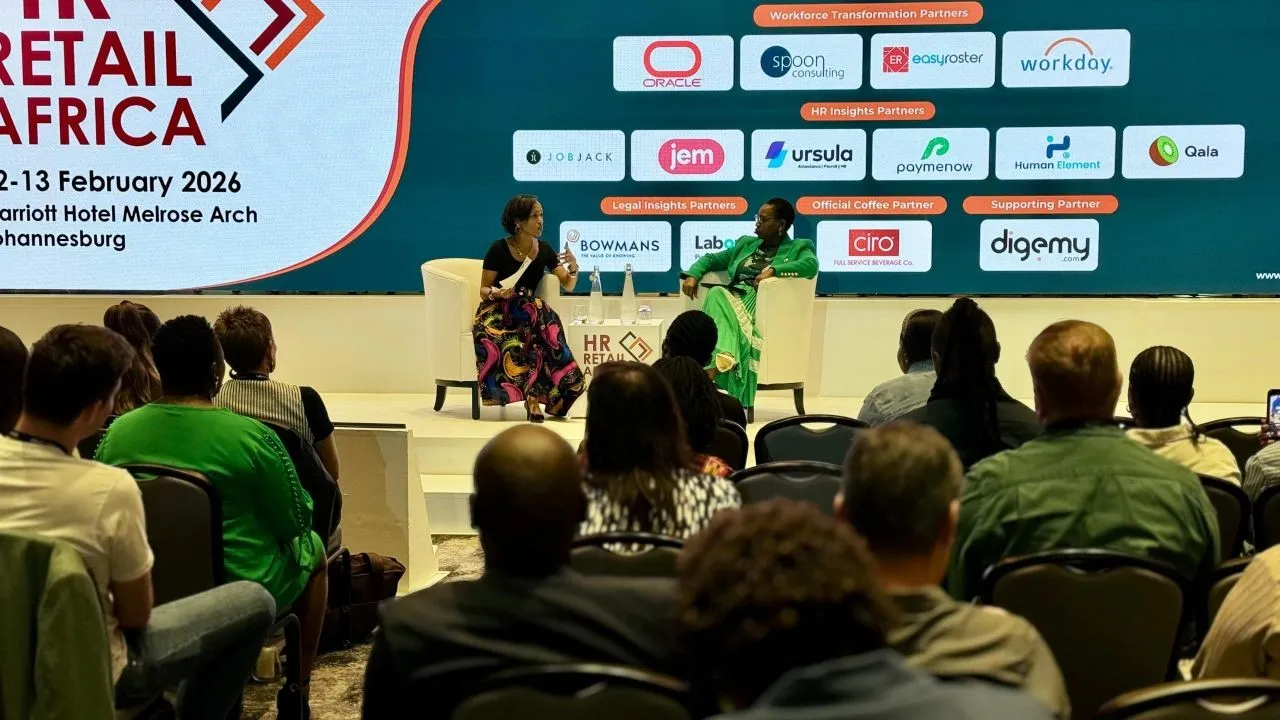
Last week marked the inaugural HR Retail Africa (#HRRA26), and Digemy was proud to be a sponsor. It wasn’t just a well-run event with an impressive line-up of speakers — it was also a timely reminder that retail is in the middle of a workforce reckoning.
Retail is facing disruption from every angle: tightening margins, increasingly demanding customers, rapid automation, and intensifying competition. Yet what became clear over the course of the conference is that the industry’s biggest differentiator doesn’t lie with technology, store design, or even product innovation. It’s people — specifically, the frontline teams who represent the brand in thousands of daily customer interactions.
In other words, the future of retail will be won or lost on the shop floor.
Frontline is Customer Experience
One of the strongest recurring themes at HRRA26 was the central role of employee experience in shaping customer experience. This is not a new idea, but it was refreshing to hear it framed so directly and consistently by leaders who understand retail realities.
Retail is often obsessed with customer satisfaction metrics, loyalty initiatives and brand promises. But customers don’t experience strategy. They experience employees. They experience a cashier who is confident and engaged, or one who is stressed and under-supported. They experience a floor assistant who can connect the dots between products, promotions and policies—or one who is guessing. The frontline doesn’t just execute the customer experience; it is the customer experience.
This is why frontline enablement has become one of the most important strategic conversations in retail today.
Retail’s Biggest Talent Challenge isn’t Hiring — it’s Retention
Another major thread running through the conference was the shifting nature of the talent battle. Many retailers have built sophisticated recruitment pipelines and screening processes, but the truth is that hiring isn’t the hard part.
Retention is.
Speakers touched on the idea that while employers think they are evaluating candidates, employees are evaluating the employer just as intensely — especially in the first six months. Those early days matter. People join expecting development, support and growth. If they experience stagnation, isolation, or a lack of recognition, they leave. Often quickly.
This is why retail's talent wars have changed shape. With jobs in high demand, it’s not about just attracting people; it’s about creating an experience that makes them excited to stay and turns them into brand ambassadors.
And that experience depends heavily on whether employees feel they are seen, appreciated and progressing.
The Workforce is Changing — Expectations are Rising
HR leaders at HRRA26 spoke about how the expectations of frontline teams are evolving. Most of today’s frontline employees are digital natives. They’re used to personalised, engaging experiences in their daily lives — from social media to mobile banking to entertainment platforms. They receive instant feedback, constant stimulation, and a steady sense of progress.
The workplace, however, still too often offers static systems, delayed recognition, and development opportunities that feel disconnected from real work.
Frontline employees want more than a payslip. They want purpose. They want to be seen. They want to learn. They want to feel like they are building something — skills, confidence, competence, a future.
Retail organisations that underestimate this shift pay the price in high employee turnover.
Why Microlearning featured so Prominently at HRRA26
Against this backdrop, it’s no surprise that microlearning emerged repeatedly as a practical and increasingly essential approach for frontline development.
In retail, there isn’t time for long training sessions or complex learning platforms. Work is fast-paced and unpredictable, and learning must fit into that reality. Microlearning means training can happen in small, targeted moments — integrated into the flow of work rather than competing with it.
But microlearning isn't simply about making training shorter. It is about making learning more accessible and more effective. When microlearning is reinforced over time, employees retain more information, and businesses build capability in a structured and measurable way.
Importantly, reinforced microlearning also produces actionable data. When implemented through the right platform, it gives HR leaders visibility into knowledge and competency levels, performance trends, skills gaps and application. It allows organisations to move beyond assumptions and understand what employees truly know — and what they don’t. It reveals operational gaps and provides a mechanism to close them.
In an industry driven by dashboards and operational reporting, this type of workforce insight is long overdue.
The Retail Paradox: Frontline Enablement isn’t a Cost Centre Anymore
This is where the Digemy team left HRRA26 both encouraged and challenged.
It was gratifying to see flow-of-work microlearning take centre stage across so many presentations. It was validating to hear senior leaders speak about the same realities we encounter daily when working with frontline teams.
However, despite the importance of employee experience, and clear recognition that the frontline is the engine of customer experience, many organisations still treat training as (at best) a cost centre, or worse, discretionary.
This has to do with the fact that Retail is ruthless about ROI. And rightly so. Margins are tight. Competition is fierce. Every line item must justify itself.
This is both a challenge and an opportunity for HR leaders looking to build a business case for frontline enablement and reinforced microlearning. It comes down to how we measure the success of our training programmes. In most instances, training is measured by attendance, completion rates, compliance.
But, when we shift our focus to measuring knowledge gains and application, we can measure success in terms of:
- Time to competence
- Sales uplift
- Service consistency
- Shrink reduction
- Customer satisfaction
And when frontline enablement is tracked against these business success metrics, it becomes both a profit-driver and a no-brainer.
The Real Unlock: Accessibility
If HRRA26 highlighted anything, it’s that frontline learning only works when it is genuinely accessible. Many frontline employees do not have corporate email addresses. Many work on shared devices. Many operate with limited data. And many are expected to engage with training while balancing real-time customer demands.
Frontline enablement tools must be designed around these realities, not around corporate assumptions.
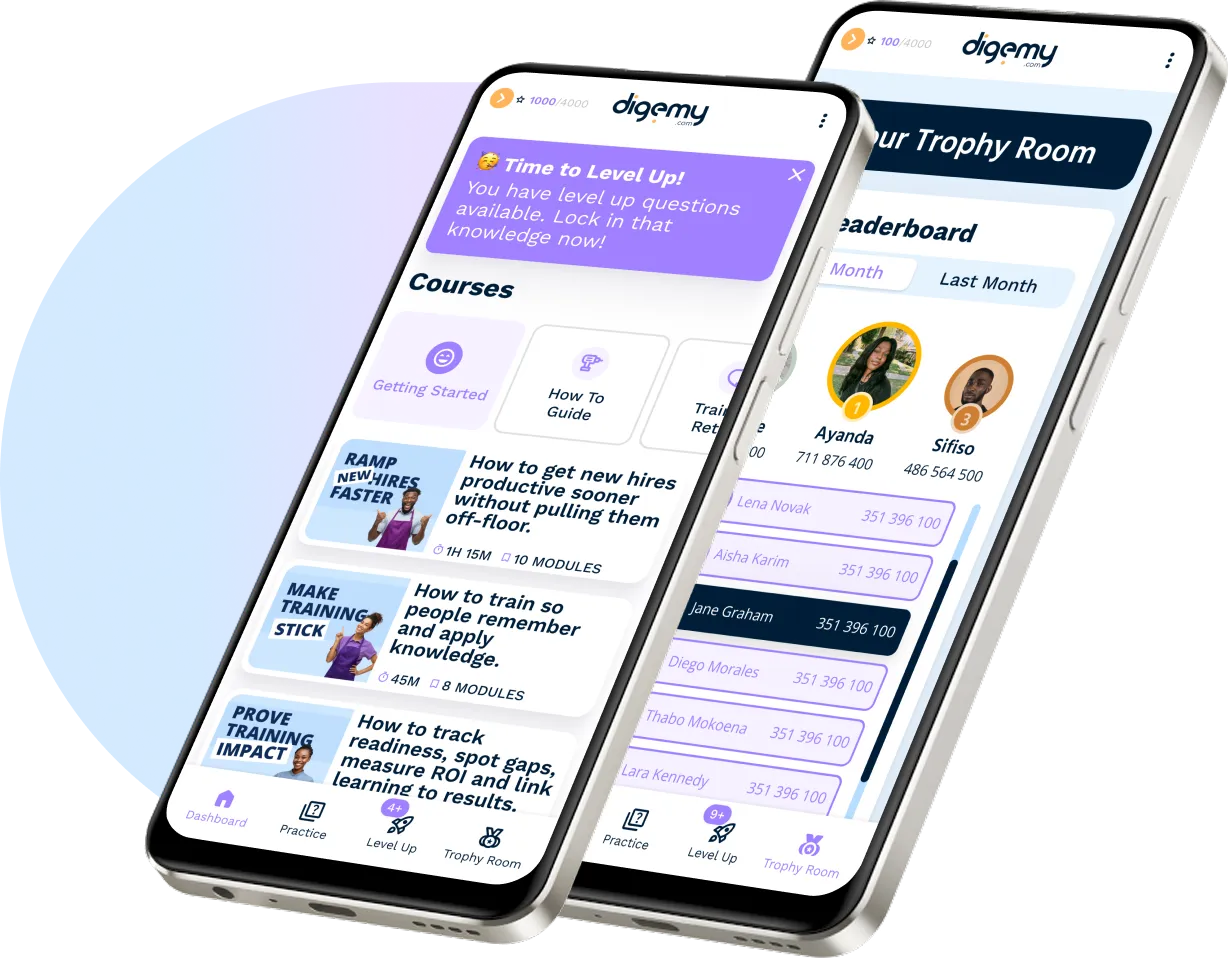
That’s why Digemy focuses so heavily on the fundamentals that drive adoption: seamless access and authentication that is not reliant on email, data-lite delivery for mobile-first environments, gamified learning experiences that motivate participation, and personalised reinforcement that improves retention and performance over time.
Because even the best content is useless if employees cannot access it easily or consistently.
What HRRA26 Confirmed for Us
The first edition of HR Retail Africa was an important moment for the industry. It demonstrated that HR leaders in retail are not only aware of the disruption around them — they are actively searching for practical ways to build capability, strengthen culture, and retain talent in the pursuit of future-ready workforces.
The conversations were sharp, honest and forward-looking. The themes were consistent. And the conclusion was hard to ignore: the frontline is not simply an operational function. It is retail’s competitive advantage.
To build future-ready workforces, retail must invest accordingly. That means moving beyond training as an event and embracing learning as an ongoing system — embedded into daily work, measured against real business outcomes, and designed around the lived realities of frontline teams.
At Digemy, we’re proud to stand alongside HR leaders who are pushing for this shift — not just as a vendor, but as a partner committed to helping retail build workplaces where people can genuinely grow.
Because retail isn’t just another industry. For many young people it represents the first step into the world of work - the foundation of careers, confidence, and economic participation.
When retailers invest in frontline enablement, they don’t just improve store performance. They build capability. They create mobility. They help people move from “a job” to a future.










.png)
.webp)


.png)

.png)