Introduction
The way people learn at work has changed.
Teams are more distributed. Roles evolve faster. Attention is fragmented. And learners increasingly expect training to feel as intuitive and accessible as the digital tools they use every day.
But many organisations still rely on learning systems designed for a different era.
If you’re exploring how to support learning at scale today, you’ve likely encountered two common options: a traditional LMS (learning management system) and microlearning platforms.
This guide breaks down what each approach is, when each works best, and how to decide which is right for your organisation.
What You’ll Learn
- What a traditional LMS is really designed to do — and the types of learning environments where it works best
- Why LMS platforms struggle in dynamic, deskless, and frontline contexts where learning must be recalled and applied
- What defines a microlearning platform, beyond simply “shorter content”
- How reinforced microlearning supports just-in-time, performance-driven learning in the flow of work
- A practical framework to help you decide which approach is right for your organisation
- A checklist of what to look for in an effective microlearning platform, from access and engagement to reinforcement, content creation, and analytics
01 What is an LMS (Learning Management System)?
Defining the Traditional LMS
A learning management system (LMS) is a centralised platform that hosts, manages, and tracks formal training programs.
In most cases, the LMS experience is administrator-led rather than learner-led. Training is planned, scheduled, and delivered in defined blocks, often mirroring classroom-style learning in a digital format.
Common Use Cases for a Traditional LMS
When learning needs to be documented, repeatable, and formally assessed — and where long‑format theory is designed to be interpreted rather than continuously remembered or applied — an LMS can be an effective solution.
Typical LMS use cases include:
- Tertiary and higher education programs: Degree courses or academic subjects where learning is exploratory, discussion‑led, and assessed over long periods rather than applied immediately.
- Conceptual or framework‑based learning: Models, theories, and bodies of knowledge intended to shape understanding rather than day‑to‑day behaviour.
- Self‑paced academic study: Learning that learners return to intermittently for reference, reflection, or assessment.
- Infrequent, milestone‑based learning: Education tied to semesters, terms, or defined programmes rather than continuous performance needs.
In these scenarios, learning often has the luxury of not needing to be remembered in detail, because insight, interpretation, or assessment — not immediate performance — is the primary goal.
Where Traditional LMS Platforms Fall Short
In dynamic, deskless, or frontline workforces, the nature of learning fundamentally changes.
Learners don’t need long, one-off courses delivered weeks or months in advance. They need on-demand, just-in-time access to information they can recall and apply in real working moments.
The challenge is memory.
Operational teams can forget up to 80% of new information within 24 hours if it isn’t reinforced. At the same time, frontline employees are often required to retain significantly more procedural and situational knowledge than desk-based teams — without consistent access to a computer or device during the workday.
When learning can’t be easily revisited, reinforced, or recalled, it can’t be applied. And when learning isn’t applied, operational gaps begin to appear — impacting consistency, safety, customer experience, and performance.
In fast-moving environments, learning needs to be available at the moment of need, easy to access, and designed for recall and application — not simply hosted, scheduled, and marked complete.
02 What is a Microlearning Platform?
Defining Microlearning
Microlearning platforms are designed for moments, not modules.
Microlearning focuses on delivering learning in small, focused bursts that are easy to consume and immediately applicable.
Instead of hour-long courses, learners engage with short pieces of content designed to address a specific skill, behaviour, or knowledge gap — exactly when they need it.
Microlearning supports just-in-time learning, helping people solve real problems in the flow of work rather than pulling them away from it.
Where traditional LMS platforms excel at managing scheduled learning events, microlearning platforms exist to meet learners at the moment of need — when information must be recalled, applied, and reinforced to support performance.
What Makes a Reinforced Microlearning Platform Different?
A reinforced microlearning platform is purpose-built to deliver, reinforce, and personalise these learning moments.
Unlike traditional LMS platforms, reinforced microlearning platforms are typically:
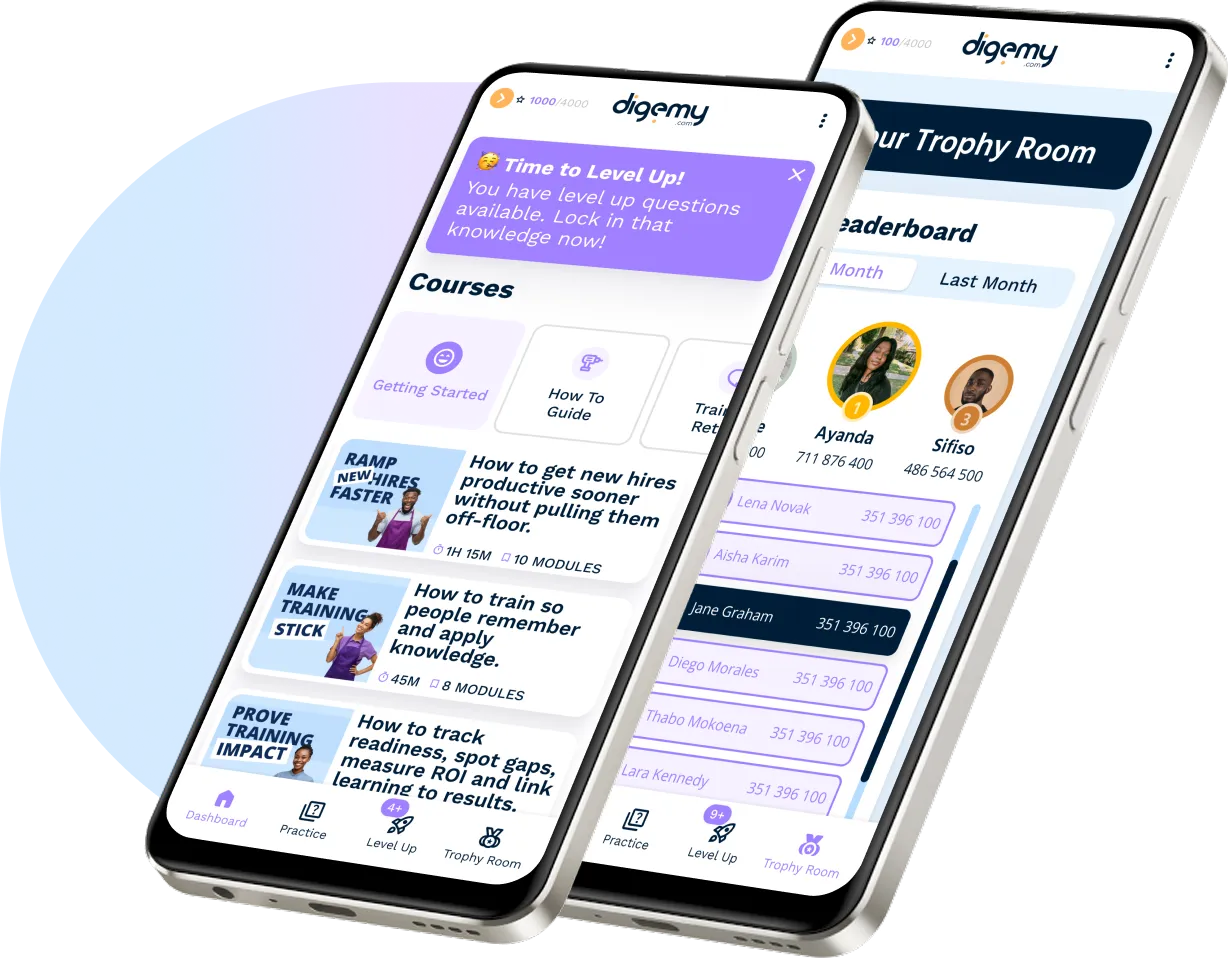
- Mobile-first and data-light, designed for use anywhere
- Seamlessly accessible, without reliance on email-based authentication
- Highly engaging, using gamification to motivate participation
- Personalised, adapting content based on learner needs and knowledge gaps
- Reinforcement-driven, using repetition and nudges to improve retention
The goal isn’t just content delivery — it’s sustained behaviour change.
An LMS is excellent at managing learning as an event.
Microlearning exists because learning is increasingly a moment.
Common Use Cases for Reinforced Microlearning Platforms
Microlearning is particularly effective when learning needs to be continuous, accessible, and embedded into daily workflows.
Typical use cases include:
- Frontline enablement: Where a consistent customer experience depends on consistent application of training, not just initial exposure to content. Learning must be available at the point of work and reinforced regularly to drive behaviour.
- Distributed, deskless, or remote teams: Workforces that need instant access to learning without relying on email, desktop logins, or high data usage — especially where teams operate across locations, shifts, or time zones.
- Fast-paced sales and customer success environments: Teams that require rapid updates on products, messaging, pricing, and processes as change happens, with reinforcement to ensure information is retained and applied in real conversations.
- Franchise enablement: Where brand standards, customer experience, and operational consistency must be maintained across independently operated locations. Microlearning ensures updates reach every franchisee quickly and are applied consistently.
- Partner enablement: Supporting external partners, resellers, or distributors who need easy, on-demand access to product knowledge and best practices without being embedded in internal systems.
- Employee onboarding and accelerated ramp time: Helping new hires become productive faster by delivering essential knowledge in manageable, repeatable learning moments rather than overwhelming them with long-form courses.
- Operational optimisation: Environments such as manufacturing, logistics, or retail operations where strict adherence to processes and procedures reduces errors, rework, and waste — and where forgetting has a direct cost.
In these contexts, learning works best when it’s fast, frictionless and unforgettable.
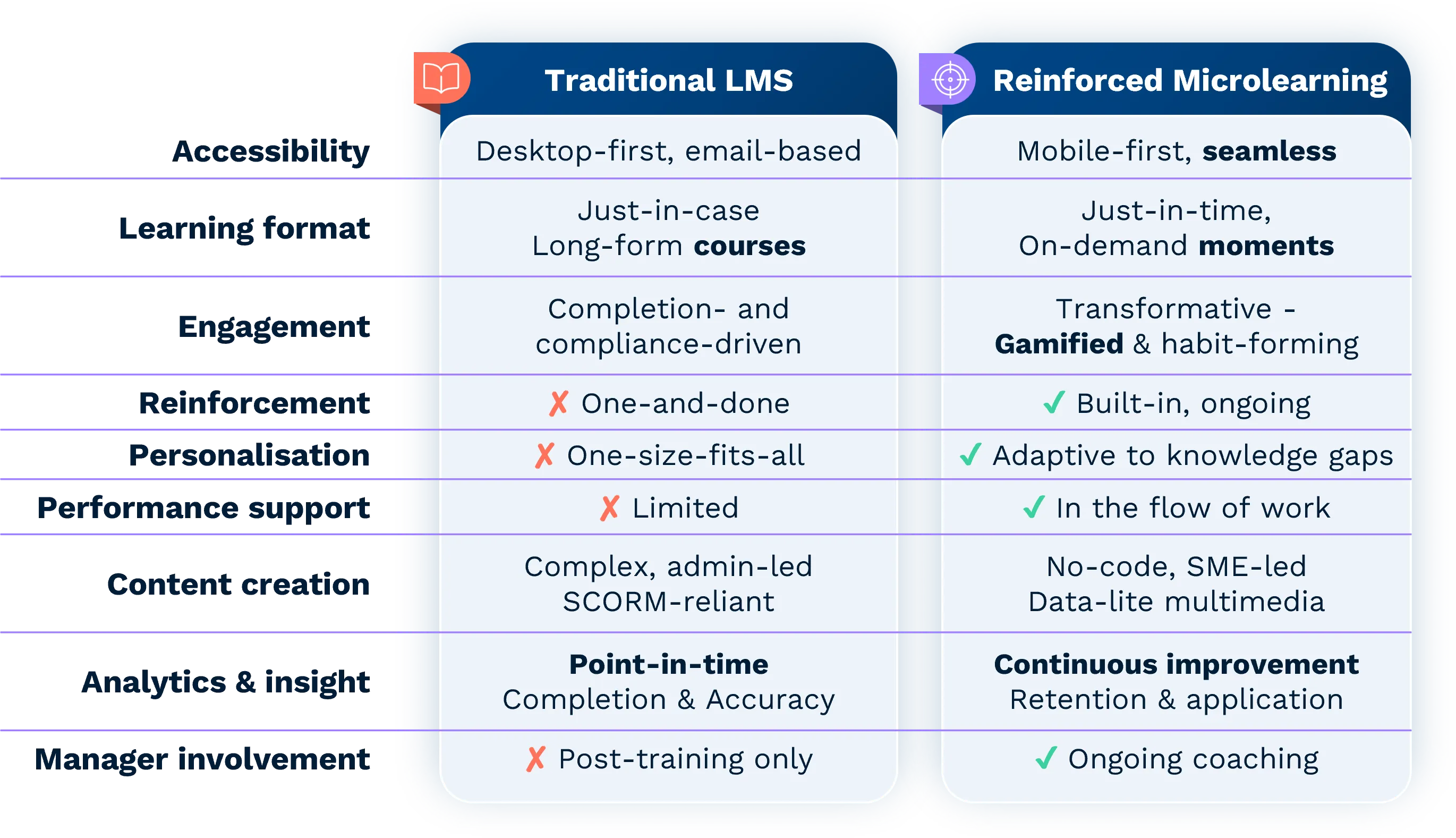
03 LMS vs Reinforced Microlearning: Key Differences
While both platforms support learning, they’re optimised for different outcomes.
In simple terms:
- An LMS is designed to manage and track formal training
- A microlearning platform is designed to support everyday learning and optimise performance
Traditional LMS platforms focus on completion. Reinforced microlearning platforms focus on engagement, reinforcement, and real-world application.
04 How to Decide which Learning Platform is Right for You
Consider a traditional LMS if:
- Compliance and completion are your primary priorities
- Learning happens infrequently or in defined programs
- Learners primarily access training via desktop
In these scenarios, structure and control may matter more than flexibility.
Choose a Reinforced Microlearning Platform if:
- You want learning to drive behaviour change, not just completion
- Your workforce is mobile, frontline, or distributed
- Access needs to be instant and frictionless
- Engagement and retention are ongoing challenges
- Learning needs to happen continuously, not once a year
For modern teams, learning works best when it meets people where they are.
05 The Ideal Microlearning Platform Checklist
Not all microlearning platforms are created equal. Once you've decided that microlearning is the right choice for your organisation, these are the key considerations that matter most.
Accessibility & Ease of Use
An effective microlearning platform should remove friction at every step of the learning journey:
- Ensure seamless access without reliance on email (including integration with existing systems where applicable)
- Support mobile-first learning and scale smoothly across devices
- Be data-light and usable in low-bandwidth environments
Learning can’t be effective if it isn’t accessible.
Engagement & Motivation
Look for platforms that:
- Use gamification to encourage participation
- Make progress visible and rewarding
- Help learners build consistent learning habits
Engagement isn’t a nice-to-have — it’s essential for retention.
Personalisation & Reinforcement
The best microlearning platforms:
- Use spaced repetition to reinforce key concepts
- Adapt spaced repetition to individual knowledge gaps (personalised reinforcement)
- Provide ongoing nudges that keep learning top of mind
We can't apply what we can't remember. Personalised Reinforcement closes the knowledge gaps behind operational inefficiency.
Content Creation that Reinforces Performance
An effective microlearning platform should support the creation of learning that is practical, memorable, and designed for real-world application.
Look for platforms that:
- Support multimedia microlearning, including short videos, visuals, audio, and concise text
- Are grounded in learning science and neuroscience, helping content creators design for attention, recall, and retention
- Enable skills-based learning, translating knowledge into observable, repeatable behaviours
- Encourage practical, real-world application, focusing on what learners need to do, not just what they need to know
- Include an intuitive content authoring tool that makes it easy to create, update, and iterate content
- Provide guidance and support on effective microlearning methodology, helping teams build capability over time
Great microlearning platforms don’t just deliver content — they help teams create learning that sticks.
Reporting, Analytics & Performance Insight
An effective microlearning platform should move beyond basic completion and accuracy metrics to uncover insights that drive real performance improvement.
Look for platforms that:
- Provide actionable training insights that highlight where knowledge gaps are creating operational or performance issues
- Measure knowledge retention over time, not just one-off completion or quiz accuracy
- Surface observable application, showing whether learning is being applied on the job
- Enable manager feedback and skill evaluation, combining learning data with real-world performance signals
- Support proactive performance management, helping managers coach, reinforce, and intervene early
- Make it easy to connect learning outcomes to business and operational goals
The right analytics don’t just report on learning — they help close performance gaps.
Final Thoughts
Choosing between an LMS and a microlearning platform isn’t about which system is better overall — it’s about which is right for your goals, your workforce, and the realities of day-to-day operations.
For many organisations, traditional LMS platforms may still work well for formal, long-form training, particularly when it comes to deskbound employees. But in frontline and operational environments, two problems tend to decide everything: accessibility and forgetting.
If training isn’t easy to access in the flow of work — especially for deskless teams with limited device time, limited bandwidth, or friction-heavy logins — learning simply doesn’t happen when it’s needed. And even when training is completed, without reinforcement most people forget the majority of what they’ve learned quickly, creating knowledge gaps that show up as inconsistency, errors, rework, and missed opportunities for improvement.
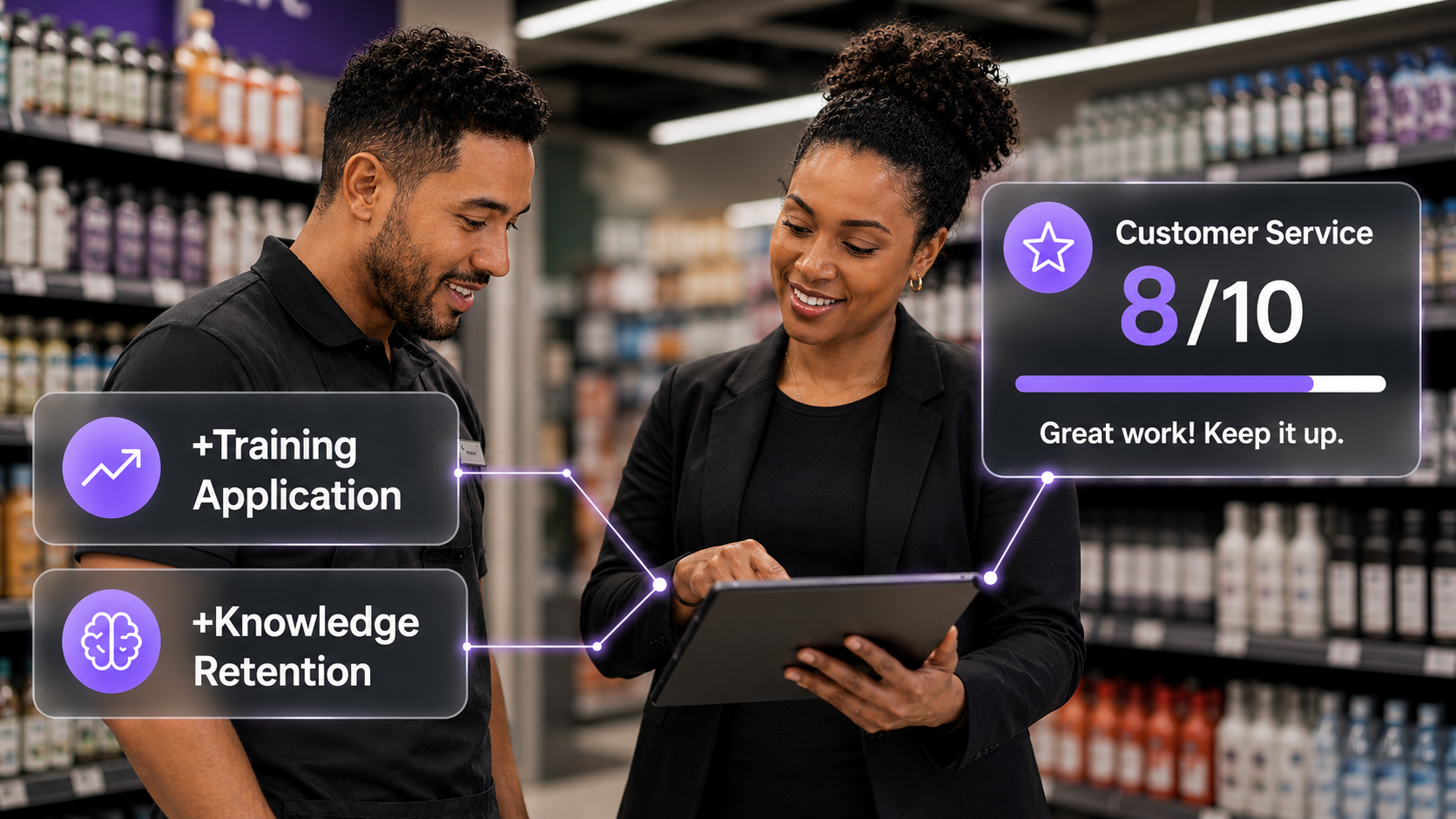
This is where reinforced microlearning has the potential to transform both training and operations. By combining frictionless, on-demand access with personalised reinforcement designed to strengthen recall, microlearning helps teams close knowledge gaps and apply what matters in real working moments — supporting operational consistency and performance over time.
As expectations evolve, the most effective learning systems are those that prioritise seamless access, engagement, and reinforcement — because training only works when people can reach it easily, remember it, and use it.
If you’re rethinking how learning shows up in everyday work, it may be time to look beyond traditional platforms and explore approaches designed for moments that matter.










.png)
.webp)


.png)

.png)