Introduction
The world of work is changing.
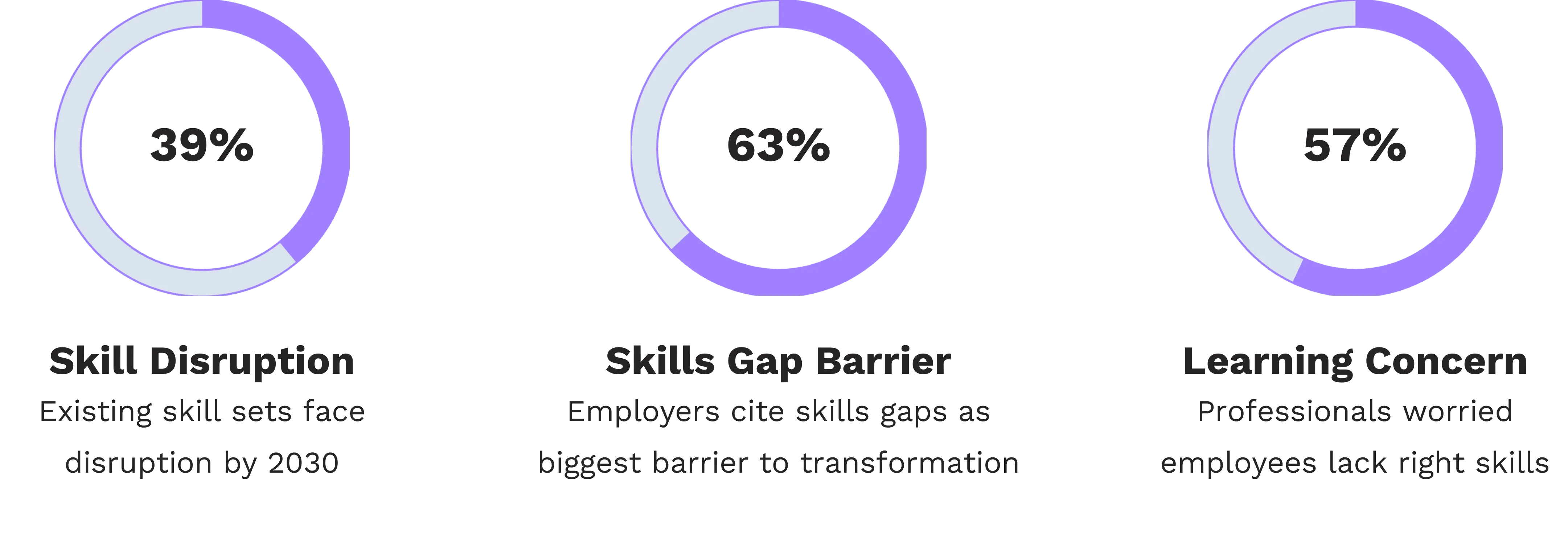
According to the WEF, 39% of existing skill sets face disruption by 2030, and 63% of employers cite skills gaps as the biggest barrier to business transformation.
LinkedIn’s 2025 UK Workplace Learning Report adds: 57% of learning and talent professionals are concerned employees don’t have the right skills to execute business strategy.
It’s not called the frontline for nothing.
The biggest impact is often felt on the frontline. As AI reshapes work and entry-level pathways tighten, younger and less experienced workers risk losing the moments that build confidence, capability and career momentum.
To build a future-ready, change-resilient workforce, we must close the gap between training and experience.
Beyond completion: the experience gap
That’s why the conversation has moved beyond training completion. The challenge isn’t just delivering learning. It’s proving that learning translates into behaviour and performance. Deloitte said it best: the harder gap to close is not the skills gap, but the experience gap.
Deloitte defines experience as the ability to apply skills, knowledge, and human capabilities in context, under real-world conditions, to create outcomes.
Why course completion isn’t the measure of learning impact
Course completion tells you training has reached people. But it measures activity more than capability.
CIPD offers a helpful reality check: effective learning evaluation must be linked to performance gaps and aligned with business objectives.
That’s the real standard. Not whether someone consumed content, but whether they can perform differently because of it.
When organisations stop at completion, they risk a false sense of progress. The dashboards tell a good story, but the operational reality says something else: inconsistent execution, patchy service, process drift, costly errors and rework.
So, how do we go beyond completion - to retention - and ultimately, application? Therein lies real training impact and opportunity.
What learning impact looks like in real work
Learning impact happens when skills show up in behaviour.
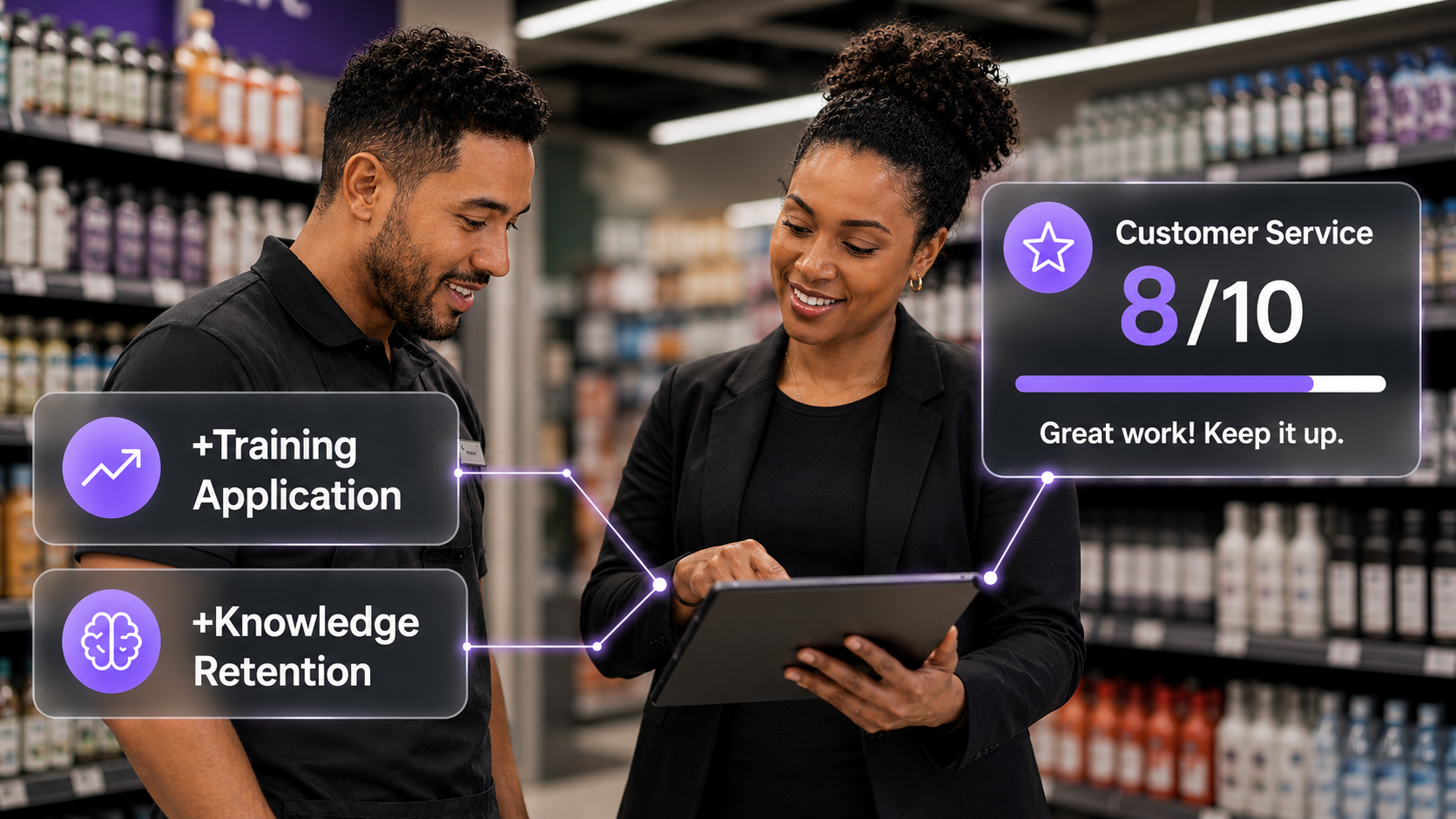
On the frontline, that might mean a manager observing whether a team member handles a customer objection well, follows a safety protocol consistently, demonstrates strong product knowledge, or executes a standard as required in a live environment.
For L&D and HR, this matters because application is where capability becomes real. It’s where learning influences confidence, consistency, quality, readiness, and, ultimately, business performance.
Whether increasing operational efficiency, accelerating ramp-time, or reducing employee turnover, the impact on the bottom line of applied learning is real and measable.
Why managers are the missing link between learning and performance
Managers and supervisors are expected to ensure training turns into behaviour change. They’re closest to the work, know what good looks like, and are best positioned to coach in the moment.
But they’re stretched.
47% of respondents in LinkedIn’s 2025 UK Workplace Learning Report said managers lack proper support, and only 11% of employees said their manager had helped them build a career plan in the preceding six months.
Manager research by Gallup points in the same direction: weekly meaningful feedback is the strongest driver of employee engagement, yet it is also the lowest-rated manager behaviour.
In other words, managers may be the bridge between learning and performance — but often they’re asked to do that job without enough time, structure, or support.
Not only does this diminish managers, it compromises employee experience, adds to operational inefficicy, and robs L&D and HR of a vital layer of insight into how training shows up at work.
The question beckons - in today’s wonderful world of automation and innovation, surely there’s a better way to empower and equip managers to coach and course correct faster and more efficiently?
How integrated, behaviour-based assessments close the gap
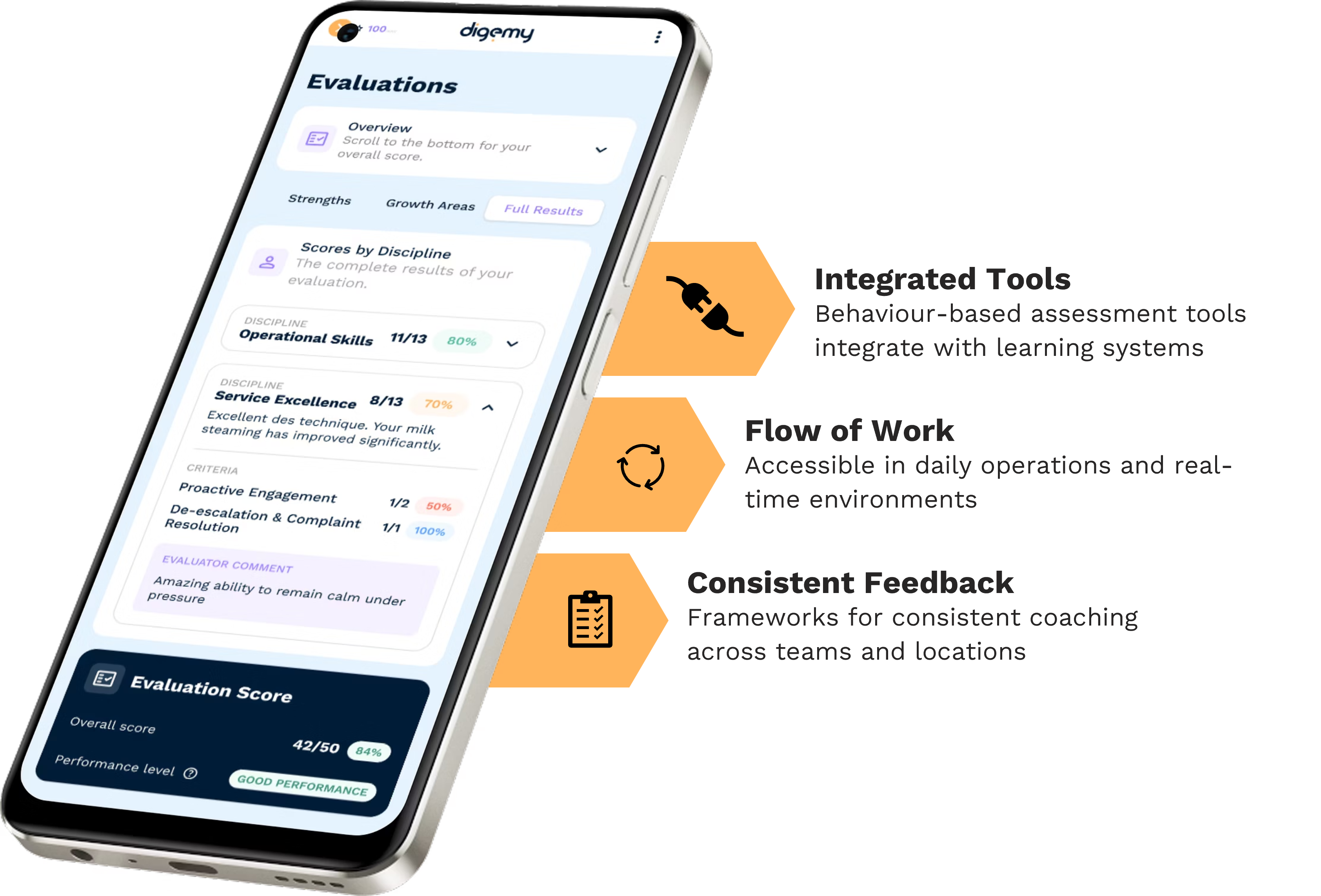
Behaviour-based assessment tools equip managers with frameworks for more consistent feedback and coaching across teams and locations.
But if we want to drive real impact and close the gap between learning and experience, these tools must integrate with learning.
And if we want to ensure adoption, they must also be accessible in the flow of work.
When we get this right we close the gap between training and experience, empower managers and maximise impact.
Why this matters most for frontline and deskless teams
For frontline and deskless workforces, the feedback loop has to be even tighter.
Performance happens live: on the shop floor, in customer interactions, on production lines, in service environments, and in moments where consistency really matters.
That is why this isn’t only an L&D reporting gain. It’s operational leverage.
McKinsey’s research on frontline retail found that supportive managers, career development, and in-store culture are key retention levers:
Companies with top-quartile employee experience are more than twice as likely to achieve top-quartile customer experience, and the best frontline employers bring workers to seasoned performance within 90 days. In U.S. retail, losing a single frontline employee costs nearly $10,000.
In consumer goods and production environments, a similar pattern emerges: McKinsey found that frontline talent challenges are driven by widening skill gaps, demand for clearer career paths, and overburdened supervisors.
So for frontline organisations, measuring skill application is not a “nice to have”. It reduces guesswork, speeds up coaching, supports consistency, improves readiness, and strengthens the business case for skills development.
How this supports a future-ready workforce
Skills-based talent management is increasingly important when it comes to building future-ready workforces.
SHRM’s 2026 skills-first research found that 70% of HR professionals expect skills-first practices to play a larger role in hiring decisions over the next three years, 65% expect on-the-job training to remain valuable, and about 85% say their organisation would be more likely to regard someone as meeting job requirements if there were a reliable way to assess their skills.
In a skills-based model, training and application go hand in hand. And performance evaluation tools are the bridge - helping managers coach with more clarity, employees master skills more quickly, and L&D move from completion metrics to capability evidence.
Conclusion: From learning activity to workforce readiness
The organisations that will win in the next era of work are not the ones delivering the most training. They are the ones building the most capability.
Because in a world where skills are changing faster than ever, the real question is no longer: Who completed the training?
It’s: Who can actually do the work — consistently, confidently, and at the standard required?
That shift changes everything.
- It moves L&D from reporting activity to enabling performance.
- It gives managers a clearer role as coaches, not just supervisors.
- It helps employees see what good looks like — and how to get there.
- And it gives the business real visibility into where capability is growing, where it’s not, and where to act next.
This is how you close the experience gap. This is how you build real mobility, not just potential. And this is how you create a workforce that is not only trained — but ready.
Because in the end, learning impact is not measured by what was completed. It’s measured by what shows up when it matters.









.png)
.webp)


.png)

.png)