A practical framework to understand how you can move from training delivered to training applied - for measurable performance improvement.
Key Takeaways
Training completion measures exposure, not behaviour change.
Training transfer occurs when employees apply and maintain training in their actual roles.
Employees may fail to apply training because of access, attention, memory, motivation, visibility or definition problems.
The Application Ladder moves from once-off delivery to reinforcement, manager visibility and behavioural evaluation.
Microlearning is most effective when it is intentionally designed around a specific workplace task.
Reinforcement improves retention by requiring employees to retrieve and use important knowledge over time.
Manager dashboards should recommend actions, not simply display completion data.
Evaluation scorecards must define application in observable terms.
Training value becomes demonstrable when application data is connected to operational performance.
Introduction
The most expensive training problem isn’t low engagement. It’s employees completing training and carrying on exactly as they did before.
This is the central challenge of training transfer: how to turn training into behaviour in the workplace.
When training transfer fails, it’s not just return on learning investment that suffers. When training isn’t applied, operational bleed follows, chipping away at the bottom line.
Training should be a multiplier. But to realise its potential, we have to change how we measure its impact. Training is only complete when the intended behaviour shows up in the flow of work.
The Application Ladder is a practical way to understand how you can move from training delivered to training applied - for measurable performance improvement.
Why Completion isn’t Evidence of Training Transfer
Traditional learning metrics measure exposure and comprehension:
Attendance
Course completion
Time spent learning
Assessment scores
Learner satisfaction
These metrics are useful, but they don’t answer the question business should care about most: did employees apply what they learned?
Like a tree falling in the forest, if training isn’t applied, did it even happen?
Branch manager
CompletedTraining on a new stock-counting process
In practiceDoesn't apply the process correctly
Contact-centre agent
PassedAssessment on a revised compliance script
In practiceDefaults to old habits during live calls
Technician
RemembersEvery step in a safety procedure
In practiceSkips one step when working under pressure
In each case, training was completed. But the desired behaviour didn’t follow. The result: rework, errors, inconsistent service, compliance exposure, slower ramp-up and missed revenue.
The cost isn’t measured in the L&D budget. But it shows up in the bottom line. That difference changes how training should be designed and measured.
When completion is the goal, training ends with an assessment. But when application is the goal, training must continue into the workplace through reinforcement, observation, feedback and accountability.
The question isn’t did employees complete the training? It’s are they applying the training when the work requires it?
6 Reasons Training Fails to Reach the Floor
Even the best training can suffer from the training-transfer problem.
Employees understand the material but fail to apply it because they can’t access the training easily, have forgotten it, don’t see a reason to change, get no feedback or weren’t clear on what good looks like when it's applied.
We’ve identified six distinct failure points:
Failure mode
What's really happening
How to fix it
1Access
Employees can't practically reach the training because of shifts, devices, connectivity or data constraints.
Mobile-first, low-data delivery
2Attention
Employees can access content but can't complete long modules during a busy working day.
Short, focused microlearning frameworks
3Memory
Employees complete the training but gradually forget what they learned.
AI-powered spaced reinforcement and active retrieval
4Motivation
Employees remember the material but see little reason to change their behaviour.
Progression, recognition, relevance and meaningful consequences
5Visibility
Managers can't see who's likely to apply the training and who needs support.
Individual application data and manager dashboards
6Definition
Nobody has clearly described what 'good' looks like.
Evaluation scorecards based on observable behaviour
Each failure point is a distinct problem:
More training won’t solve an access problem. More engaging content won’t solve a visibility problem. Additional reminders won’t help when managers and employees haven’t agreed on what behaviour should change.
If training is to drive the change we want to see in the workplace, it must address and overcome all of these failure modes.
The Application Ladder: 7 Layers of Training Effectiveness
The Application Ladder addresses these problems, mapping seven layers of training intervention to the likelihood of workplace application.
The application ladder uncovers a simple truth: training delivery improves the opportunity to apply, but measurement and workplace accountability are needed to close the final gap. Let’s unpack:
1
Classroom training can create focus, discussion and shared understanding. Its weakness isn't quality, it's what happens afterwards.
Without continued practice or reinforcement, knowledge decays. And without access, employees have no means of revisiting lost information.
75%up to 75% of new information can be forgotten within 24 hours without a system that bridges the gap.
And what we can't remember, we can't apply.
2
Digital training improves accessibility. Employees can revisit material, access training across locations and complete it with greater flexibility.
This is especially important for distributed and frontline workforces, where classroom attendance may be constrained by shift patterns, travel, device access or operational pressure.
However, making training available doesn't guarantee that employees will complete, revisit or apply it. Access removes the first barrier to application — nothing more.
3
Microlearning reduces the attention burden by breaking content into focused, manageable units. Instead of asking employees to complete a 45-minute module during a busy shift, the organisation delivers short learning interventions centred on one concept, decision or behaviour.
Effective microlearning isn't just long content cut into smaller pieces. Each concept serves a clear purpose, connecting to a workplace task and giving employees a practical framework and benchmark for what good and bad looks like, practically.
When intentionally designed, microlearning makes training more practical without sacrificing depth.
4
Knowledge decays when it isn't retrieved or used. Spaced reinforcement brings important knowledge back at carefully planned intervals — employees are asked to recall and use information rather than passively reread it. This signals to the brain that the information is important and should be retained in long-term memory.
Reinforcement is especially important when:
The task is performed infrequently
The consequences of an error are high
Employees are learning several new processes
Behaviour must remain consistent over time
Staff turnover creates a continuous onboarding requirement
For training to be effective, it cannot be treated as a single event followed by silence. It should be treated as a process that continues until the information is retained and the behaviour becomes second nature.
5
Gamification strengthens motivation by making progress visible and recognising sustained participation or improvement. Effective mechanisms include:
Progress levels
Achievement milestones
Recognition from managers
Meaningful rewards
Visible improvement against a personal baseline
The purpose is not to turn serious workplace learning into entertainment. The purpose is to make progress tangible and give employees a reason to remain engaged long enough for the information to stick and new behaviours to become established.
6
At this point, the organisation has improved access, attention, memory and motivation. But managers still need to know where support is required.
A useful manager dashboard doesn't just report that 87% of a team completed a module. It helps the manager identify:
Which employees are retaining the material
Where confidence or performance is declining
Who may be at risk of applying the process incorrectly
Which concepts require reinforcement
Where a coaching conversation is needed
What action the manager should take next
This shifts training data from reporting to intervention. The dashboard should reduce managerial effort, not create another layer of administration — a busy manager is unlikely to study several reports and manually translate them into a coaching plan. The system should surface the right person, the right issue and the right next action.
7
The final rung defines and measures what application actually looks like. This is the layer many organisations fail to add, or add too late. Before training begins, the business should be able to describe the expected behaviour in observable terms — in fact, training should be designed around the desired behaviour.
✕Not observable"Understands the returns process"
✓Observable"Confirms proof of purchase, selects the correct return reason and completes the required system fields"
An evaluation scorecard translates the learning objective into workplace evidence. A strong scorecard defines:
The behaviour to be observed
The required standard
Who will evaluate it
How frequently it will be reviewed
What evidence will be used
What happens when the standard is not met
How improvement will be recognised
Without this definition, organisations can't reliably distinguish between someone who knows the process and someone who consistently applies it.
7 Step Framework to Application-Focused Training
The Application Ladder shouldn’t be treated as a list of software features.
It is a sequence of design decisions:
1
Start with the workplace, not the course. Ask:
What should the employee do differently?
In which situation should the behaviour occur?
What would a manager be able to observe?
What would good performance look like?
What business measure should improve when the behaviour changes?
Avoid objectives such as "understand," "know" or "be aware of." Use observable verbs like:
Measure current performance before launching the intervention. Without a baseline, improvement is difficult to prove.
The baseline might include:
Error rates
Process adherence
Time-to-competency
Quality scores
Sales conversion
Customer complaints
Compliance exceptions
Rework
Manager observations
Select a small number of measures that are closely connected to the target behaviour. Don't try to prove the value of training through every available business metric.
3
Design for the employee's actual working environment. A frontline worker may have limited time, shared devices, inconsistent connectivity and no quiet place to learn. That should influence the format from the start.
Use:
Mobile-first delivery
Short learning units
Low-data design
Clear navigation
Downloadable or offline-friendly content where required
Learning activities that can be completed between operational tasks
4
Use retrieval questions, scenarios, decisions and short practice activities rather than repeated exposure to the same explanation.
Prioritise:
High-risk decisions
Frequently misunderstood concepts
Steps that employees regularly skip
Knowledge that is required infrequently but must be recalled accurately
Behaviours linked to safety, compliance or revenue
5
Managers do not need more learning reports. They need better decisions. A manager view should answer:
Who needs attention?
What are they struggling with?
What is the likely operational risk?
What should the manager do?
When should the issue be reviewed again?
Where possible, the system should give insight into where coaching and intervention is needed most.
6
Build a short scorecard for the required behaviour. For example:
Scorecard element
Example
Target behaviour
Completes the pre-use equipment safety check
Evidence
Supervisor observation and digital checklist
Frequency
Weekly for the first month
Standard
Every required step completed in sequence
Target
90% consistent application
Follow-up
Coaching and targeted reinforcement after a missed step
Re-evaluation
Within seven days
The scorecard should be simple enough to survive a busy working environment. A theoretically perfect evaluation process that managers cannot sustain will quickly collapse.
7
The final step is to test whether the behaviour is influencing the intended operational outcome. For example:
Does correct process application reduce rework?
Does better product knowledge improve conversion?
Does repeated safety behaviour reduce incidents?
Does improved onboarding shorten time-to-competency?
Does consistent compliance behaviour reduce exceptions?
This is how learning begins to move from a cost-centre discussion to a performance discussion.
This is how learning begins to move from a cost-centre discussion to a performance discussion.
How to Assess Your Current Position on the Application Ladder
Use the following questions to evaluate your current training system:
Training application diagnostic
0 / 9
01Can every employee access the learning in their normal working environment?
02Can the content be completed without disrupting operations?
03Is important knowledge reinforced after the initial training?
04Are employees given a meaningful reason to remain engaged?
05Can managers see individual learning risk rather than only team completion?
06Has the required workplace behaviour been clearly defined?
07Is application evaluated continuously?
08Can application data be connected to an operational result?
09Does the system reduce manager administration?
An organisation may have sophisticated training and still remain halfway up the ladder.
What matters is whether the system makes the desired behaviour easier to remember, easier to perform, easier to observe and easier to improve.
The Goal isn’t More Training. It’s More Application.
Training transfer is where learning investment becomes an operational multiplier.
Without application, a training programme may generate excellent completion data while leaving performance unchanged.
The Application Ladder helps organisations identify which layer is missing.
But the highest rungs address the issues most training systems overlook: whether managers can see who needs help and whether the organisation has clearly defined the behaviour it expects.
Application isn’t an additional measurement placed on top of training. It is the evidence that training worked.
If you want stronger performance stop asking only whether employees completed the learning. Start asking whether the learning changed what employees did next.
Where does your training actually stand?
Get your training application score
Book a short consult and we'll walk through where your programme sits on the Application Ladder — and what it would take to move up a rung.
Training transfer is the extent to which employees apply and maintain the knowledge or skills gained during training in their actual work.
It differs from course completion or assessment performance, which primarily measure exposure and recall.
Employees may be unable to access the training easily, lose attention during long modules, forget the content, lack motivation, receive no feedback or have no clear definition of the behaviour expected from them.
Each cause requires a different intervention.
Start by defining the required behaviour in observable terms.
Then collect individual-level evidence through manager observations, operational data, digital workflows or evaluation scorecards. The information should lead to a specific coaching or reinforcement action.
Microlearning reduces the attention burden by delivering focused learning in short units.
It is most effective when each unit supports a specific decision or workplace behaviour and is combined with reinforcement, practice and feedback.
Employees are more likely to retain knowledge when they retrieve and use it repeatedly over time.
Spaced reinforcement brings critical information back before it is lost and helps employees access it more reliably during real work.
Managers create expectations, provide opportunities to practise, observe behaviour and give feedback.
Training is less likely to transfer when employees receive no workplace support or when the new behaviour is not reinforced by their manager.
Oops! Something went wrong while submitting the form.
Frontline Enablement
Training Transfer: The 7-Step Application Ladder
A practical framework to understand how you can move from training delivered to training applied - for measurable performance improvement.
Alexis Kitchen
Read blog post
Neuroscience
Cómo el aprendizaje electrónico basado en la neurociencia crea equipos prósperos y de alto rendimiento.
El entrenamiento respaldado por la neurociencia y alineado con el funcionamiento real del cerebro reduce el tiempo de preparación, mejora la participación y garantiza la retención a largo plazo. Porque la capacitación no consiste solo en brindar información, sino en hacer crecer una fuerza laboral próspera que impulse el éxito empresarial.
Alexis Kitchen
Read blog post
Onboarding
Cómo optimizar la incorporación de empleados para la retención
Las primeras impresiones cuentan. La incorporación da forma a la retención, el compromiso y la productividad, pero los métodos anticuados son un fracaso para la fuerza laboral actual. Descubra cómo el microaprendizaje digital y reforzado garantiza que los empleados permanezcan, crezcan y tengan éxito. Haga que su incorporación cuente.
Alexis Kitchen
Read blog post
E-learning
Optimice la incorporación de empleados con el aprendizaje electrónico
El proceso de incorporación de los empleados puede llevar mucho tiempo y ser abrumador para los departamentos de recursos humanos y los gerentes de línea. Sin embargo, se puede simplificar y hacer más eficiente a través de las plataformas de aprendizaje electrónico. Al aprovechar el poder de estas herramientas digitales, puede garantizar una experiencia de incorporación fluida y eficaz para los nuevos empleados, una experiencia que acelere el tiempo de rendimiento y haga que los empleados se sientan valorados, informados y empoderados.
Alexis Kitchen
Read blog post
E-learning
El estado de la formación en el lugar de trabajo
Nuestra investigación reveló que la baja retención de la formación es la principal causa de ineficiencias operativas. Descubra cómo los principales empleadores están aprovechando la tecnología y la neurociencia para superar la curva del olvido y lograr operaciones de aprendizaje integradas y más impactantes.
Alexis Kitchen
Read blog post
Micro-learning
La condición humana: formación transformadora para una cultura de aprendizaje continuo
La neurociencia del aprendizaje para mejorar la retención, la aplicación y el impacto de la formación.
Alexis Kitchen
Read blog post
Micro-learning
Más allá del microaprendizaje: descubra la excelencia operativa para obtener márgenes y cuota de mercado en la primera línea del comercio minorista
El panorama minorista actual es tan dinámico como competitivo. Tras la evolución de las expectativas de los consumidores, los imperativos de la transformación digital y el cambiante entorno macroeconómico, subyace una palanca para alcanzar la excelencia operativa que con frecuencia se pasa por alto: la capacitación de primera línea. En este artículo, analizamos el panorama imperante y el papel fundamental del microaprendizaje móvil, que se adapta a las lagunas de conocimiento de las personas, como un mecanismo poderoso para superar estos desafíos, y revelamos cómo su enfoque de la formación y el desarrollo puede generar una verdadera ventaja competitiva más allá de los productos y la tecnología.
Alexis Kitchen
Read blog post
Micro-learning
Entrene para retener: 10 maneras de maximizar la capacitación y la retención del talento en primera línea
Retener y hacer crecer el talento en la primera línea es clave para la continuidad y la mejora continua, pero sin una transferencia efectiva de conocimientos a la primera línea, la baja moral y las altas tasas de deserción seguirán siendo puntos débiles. La formación centrada en la retención es la respuesta, pero ofrece un potencial mucho mayor: la oportunidad de optimizar las operaciones basándose en los datos. Descubra cómo
Alexis Kitchen
Read blog post
E-learning
De la A a la Z del aprendizaje electrónico
En los últimos años, el aprendizaje electrónico (aprendizaje electrónico) se ha convertido en una industria en auge, avanzando en la tecnología que ofrece capacitación y aprendizaje a través de recursos digitales. Hay un montón de jerga por ahí y puede resultar bastante técnico, ¡pero no te preocupes! Tenemos lo que necesita.
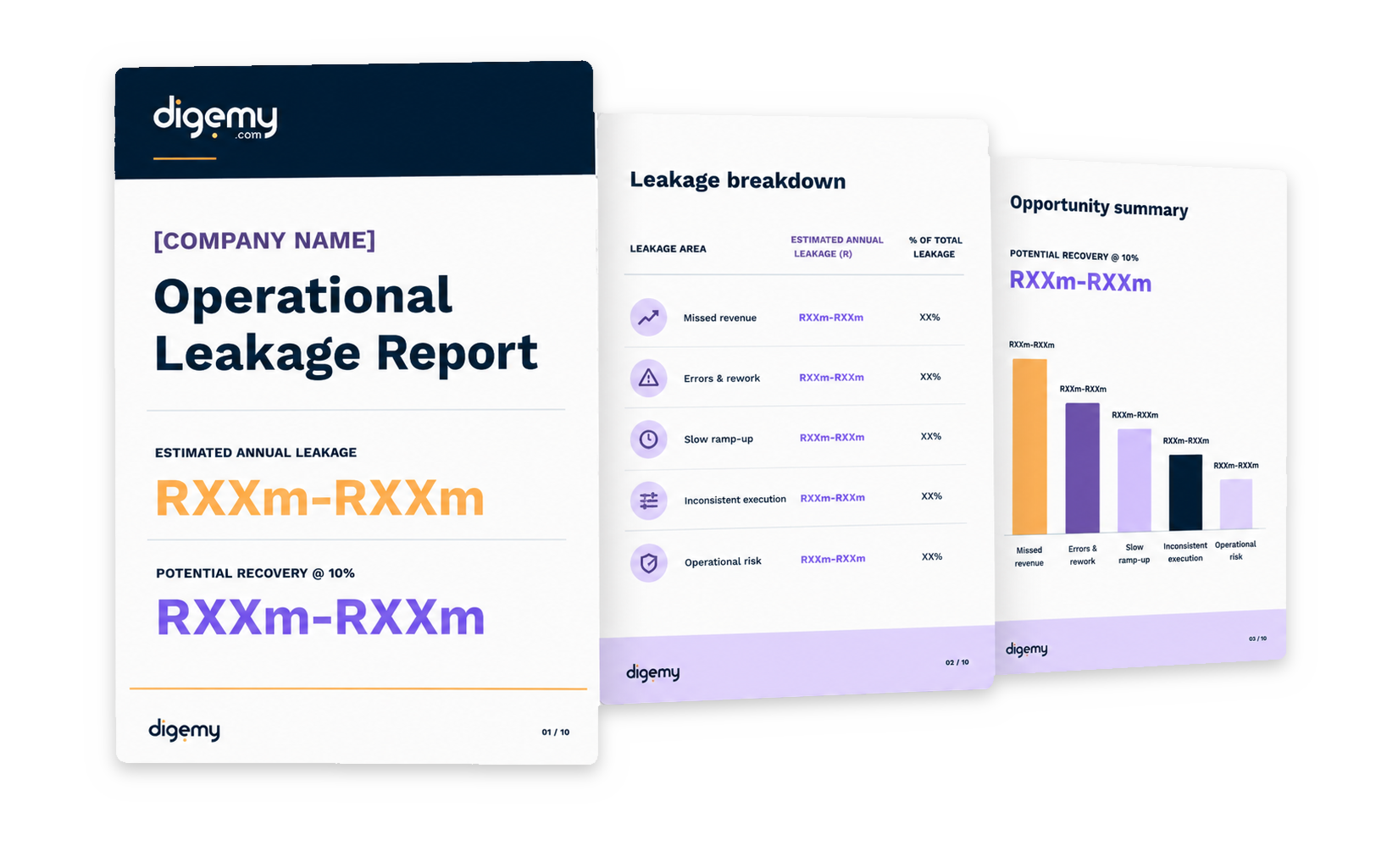
Training completions doesn't mean performance. Get a free, customised report identifying where gaps may be costing you — lost revenue, errors, slower ramp-up and operational risk.